
India's accounting-software market is large, fast-growing, and structurally fragmented because the customer base is fragmented: over 7.83 crore Udyam-registered MSMEs (as of 28 February 2026) but only ~1.51 crore active GST-registered taxpayers, and an even smaller paying software base. Tally dominates (reported at over 75% share, though the figure is contested) but no player can win the whole market because the "MSME" label spans a nano-kirana in a Tier-4 town and a ₹200-crore pharma distributor: utterly different software needs.
Regulation, not technology, has been the primary demand engine. Each compliance wave: VAT (2005), Tax Audit/e-filing, GST (July 2017), e-way bill (2018), e-invoicing (2020, threshold now ₹5 crore), and the audit-trail/edit-log mandate (April 2023): created a fresh greenfield that spawned new entrants and forced incumbents to re-tool. GST was the single biggest demand shock in the industry's history.
The market splits into two distinct buyers with one kingmaker in between. Businesses buy for billing/inventory/GST; CA firms use software to verify, audit, and bulk-file. The Chartered Accountant is the decisive channel, "CA recommends, business buys," which is precisely why Tally, built into the muscle memory of millions of accountants, remains near-unassailable in the mid-market even as cloud/mobile challengers win the nano and micro segments.
Key Findings
Market size is genuinely contested, by roughly 20x. Estimates range from ~US$0.7B (IMARC, 2025, software only) to US$16.5B (Jadhavar, 2025), and the much larger US$28B+ figure often quoted is actually IMARC's separate accounting services market, not software. Both software estimates agree on the direction: high single-digit to low double-digit CAGR. The divergence itself is a finding: there is no agreed market definition.
The funnel collapses fast. Over 7.83 crore registered MSMEs → ~1.51 crore active GST taxpayers → a far smaller set that actually pays for software. The nano/micro majority uses free tools, WhatsApp, spreadsheets, or nothing.
Tally is the bootstrapped, profitable incumbent; VC-backed challengers (Khatabook, FloBiz, Vyapar) chased the nano segment with freemium and mostly struggled to monetise: a cautionary tale about willingness-to-pay at the bottom of the pyramid.
Global players struggle in India. Intuit exited QuickBooks in 2023, the defining case study in why localisation, price sensitivity, and the CA channel defeat well-funded foreign entrants.
The AI-native wave (2024–26) is real but early, centred on OCR of invoices/bank statements, auto-reconciliation, and GST-code prediction, aimed as much at CA firms as at businesses.
Historical Origins: The Indian Context
1.1 Ancient and Pre-Colonial Foundations
Accounting in India is not an import. Kautilya's Arthashastra (c. 4th century BCE) contains a dedicated chapter on "the business of keeping up accounts in the office of accountants," classifying income (aya) and expenditure (vyaya), prescribing audit to prevent fraud, and appointing officials to maintain and verify the royal treasury. Scholars[7] have argued it "contains more accounting theory than Luca Pacioli's" 1494 treatise.
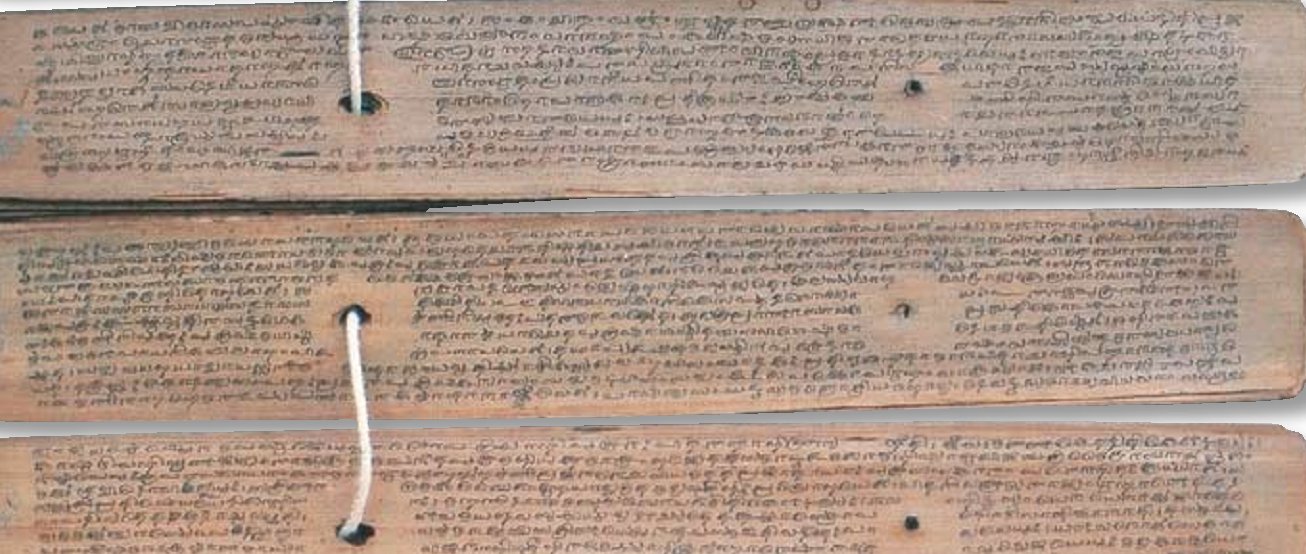
The indigenous bahi-khata system of bookkeeping, recorded in specialised commercial scripts such as Mahajani, was used across the Marwari, Gujarati, and Chettiar merchant communities. B.M. Lall Nigam's landmark 1986 paper in Abacus[5] argued that "the Bahi-khata is a double-entry system of bookkeeping that predates the 'Italian' method by many centuries." That specific priority claim was contested the following year by Nobes (1987)[6], who dismissed the supporting evidence as hearsay; the antiquity of Indian bookkeeping itself is well established, but the precise pre-Pacioli double-entry claim remains academically disputed. Merchant account books (pothis, chopdis) were closed annually at Diwali; instruments such as the hundi (bill of exchange) supported inter-regional and international trade. The parta system gave owners a daily profitability estimate.
1.2 Colonial Era and the Birth of the Profession
British rule introduced Western double-entry via the joint-stock company. The Companies Act, 1913 required company audits and created the categories of auditor; the Government Diploma in Accountancy (GDA) and the Registered Accountants regime followed. This laid the institutional groundwork for a formal profession.

1.3 ICAI and the Standard-Setting Architecture
The Institute of Chartered Accountants of India (ICAI) was established under the Chartered Accountants Act, 1949, starting with about 1,700 members. As of the ICAI Student & Member Report 2025[8] (data to 28 February 2025), it had 4,07,629 members, 10,06,256 students, and 98,967 registered firms, making it one of the largest accounting bodies in the world. ICAI's Accounting Standards Board (ASB) issued Accounting Standards (AS) from 1977. Convergence with IFRS produced Ind AS, notified under the Companies (Indian Accounting Standards) Rules, 2015 and phased in from FY2016-17 for listed and large companies. The National Financial Reporting Authority (NFRA) was created in 2018; today ICAI recommends standards, NFRA examines them, and the MCA notifies them under Section 133 of the Companies Act, 2013.
1.4 Why CAs Are the Kingmakers
CAs are gatekeepers of software purchasing. Businesses defer to their CA on what to run because the CA must ultimately verify and file. Since Tally became the software CAs trained on and recommended, it acquired an "accountant availability" moat: millions of accountants and bookkeepers are Tally-fluent, so switching a business off Tally means retraining or losing its accountant. This "CA recommends, business buys" dynamic is the single most important structural feature of the Indian market.

1.5 The Technology Ladder
The Indian SMB climbed a clear ladder:
Rokad bahi (cash book) and khata bahi (ledger) → Lotus 1-2-3, then Microsoft Excel → Tally's early DOS versions → Tally 9, BUSY, Marg → Zoho Books → Vyapar, myBillBook, Khatabook → the 2024–26 AI wave.
Regulatory & Policy Drivers: The Real Demand Engine
Every major adoption wave in Indian accounting software maps to a compliance event, not a technology breakthrough:
| Year | Policy trigger | Effect on software demand |
|---|---|---|
| 1961 | Income Tax Act, TDS | Baseline computation and return-prep needs |
| 1956/2013 | Companies Act, Schedule III, statutory audit | Format-compliant books; auditor tooling |
| 1986–04 | MODVAT/CENVAT, Excise, Service Tax | Excise/tax modules in ERP (Marg, Tally) |
| 2004–05 | State VAT rollout | First mass wave of small-business tax software |
| 44AB | Tax Audit | CA-side computation tools (Genius, Winman, KDK) |
| 2000s | E-filing of returns | Digital filing utilities |
| 1 Jul 2017 | GST rollout (GSTN, GSTR-1/3B/2A/2B, HSN) | The single biggest demand shock; birthed the GSP/ASP ecosystem |
| 2018 | E-way bill | E-way bill generation modules |
| Oct 2020 → | E-invoicing (IRP/IRN), threshold ₹500cr → ₹5cr (since 1 Aug 2023) | Repeated re-tooling; each cut pulled a new tranche of SMEs into scope |
| 1 Apr 2023 | Audit trail / edit-log mandate | Non-disableable edit logs; TallyPrime shipped an “Edit Log” release |
| 22 Sep 2025 | GST 2.0: slabs rationalised to 5% / 18% / 40% | Mass rate-master updates across all software |
The e-invoicing threshold was cut in five steps: ₹500cr → ₹100cr (1 Jan 2021) → ₹50cr (1 Apr 2021) → ₹20cr (1 Apr 2022) → ₹10cr (1 Oct 2022) → ₹5cr (1 Aug 2023)[12][13][14], each cut pulling a new tranche of SMEs into mandatory compliance. The audit-trail mandate itself was notified 24 March 2021 and deferred twice before taking effect on 1 April 2023[15][16]; it applies to companies under the Companies Act and does not extend to LLPs, partnerships, or proprietorships, which is one reason Tally-anchored small traders felt none of its pressure. GST 2.0's slab rationalisation was decided at the 56th GST Council meeting on 3 September 2025.[17]
Digital public infrastructure (UPI, the Account Aggregator framework, ONDC, and Digital India) has expanded the surface for embedded finance and auto-reconciliation. Presumptive taxation (44AD/44ADA) reduces the compliance burden for the smallest businesses, which is one reason the nano segment under-buys software.
GST collections hit an all-time high of ₹22.08 lakh crore in FY25 (9.4% YoY growth; average monthly collection ~₹1.84 lakh crore), with more than 1.51 crore active GST registrations as of 30 April 2025.[9]
The active base comprises ~1.32 crore normal taxpayers, ~14.86 lakh composition taxpayers, and ~3.71 lakh TDS accounts.[10] Registered taxpayers have grown roughly 25-fold from ~60–65 lakh at GST's 2017 launch.[9][11]
Market Sizing and Segmentation
3.1 The MSME Universe and the Funnel
Registered MSMEs: over 7.83 crore on the Udyam Registration Portal and Udyam Assist Platform as of 28 February 2026[1][3][4] (up from 0.79 crore in FY22); the "6 crore MSME" figure commonly cited is now superseded but remains a useful order of magnitude for the informal-inclusive base. These enterprises account for an estimated 34.50 crore jobs (Union MSME Minister, Lok Sabha, 12 March 2026).[2]
GST-registered taxpayers: ~1.51 crore active (April 2025). Paying software base: a fraction of the GST base. The nano/micro majority uses free apps, spreadsheets, WhatsApp, or manual books.
This funnel is the master key to the entire industry structure. The Total Addressable Market is the GST + company + LLP base; the Serviceable Available Market is those willing to pay; the Serviceable Obtainable Market for any one vendor is narrower still, because vertical and language needs splinter it.
3.2 Market Value
Estimates diverge sharply by definition, by roughly 20× between the lowest and highest credible figures:
- IMARC (software): US$698.87 million (2025) → US$1,496.95 million (2034), 8.83% CAGR.[18]
- Jadhavar Business Intelligence (software): US$16.54 billion (2025) → US$33.72 billion (2032), 10.76% CAGR; names Tally, Zoho Books, and BUSY as leading players.[20]
Part of the confusion is that "accounting software" and "accounting services" get conflated in circulating figures. IMARC's own estimate of the much larger accounting services market, US$28.38 billion (2025) → US$65.63 billion (2034), of which tax preparation is 33%[19], is close to the kind of number often quoted for "the accounting software market" in casual references. It isn't the same market.
Our read
There is no standard market definition here, and we don't think it can be reconciled from outside: IMARC's narrower figure and Jadhavar's broader one likely differ on whether ERP, tax/compliance tooling, and services-adjacent revenue are in scope. What both agree on is the direction: high single-digit to low double-digit CAGR, and cloud as the fastest-growing deployment mode, even though desktop remains dominant in the mid-market because of the "my data on my computer" preference.
3.3 Segmentation Axes
By business size
Nano (below GST threshold), micro, small, mid-market, enterprise.
By user type
Business owner, in-house accountant, external CA firm.
By vertical
Retail, distribution/wholesale, manufacturing, pharma (batch/expiry), jewellery (karat/making charges), textiles (lot/roll), F&B, professional services. The single biggest driver of fragmentation.
By geography, language, device
Metro vs Tier-2/3/4; English vs vernacular; desktop-first vs mobile-first.
Why So Many Players? The Core Analytical Question
There are dozens of Indian accounting-software companies because the market rewards fragmentation. Applying a structured lens:
Extreme heterogeneity of demand
A 7.83-crore-strong MSME base spans nano-retailers to mid-market manufacturers. No single product can serve a jewellery shop, a pharma distributor, and a freelance designer equally well.
Vertical lock-in
Marg dominates pharma distribution (claims >50% share in pharma/FMCG trade); LOGIC ERP owns apparel/footwear retail micro-verticals. Switching costs within a vertical are high; fragmentation across verticals is the norm.
Regulatory churn creates repeated greenfields
Each of VAT, GST, e-way bill, e-invoice, and the audit-trail mandate opened a window for a new entrant to leapfrog incumbents on compliance. GST alone birthed a cohort of cloud-native players.
Low capital to build, deep talent pool
India's large software-engineering supply and low build cost mean a competent GST-billing app can be shipped by a small team, hence the long tail of regional and niche apps.
Distribution economics
Tally and Marg built vast reseller/channel-partner networks (Marg cites 850+ sales/support centres) and CA-led distribution because low price points make direct enterprise sales uneconomic. The channel is a moat and a barrier.
Willingness-to-pay constraints
ARPU expectations at the bottom are punishingly low (₹0–₹5,000/year for micro), forcing freemium and mobile-first models, making profitability elusive for VC-backed nano-segment players.
Trust, data localisation, desktop preference
Many Indian SMBs still want their data on their own machine, sustaining desktop incumbents against pure-cloud disruptors.
Porter's Five Forces
but segmented by vertical/size
high for nano apps (low capital); low for the CA-anchored mid-market (channel + accountant-availability moat)
high at the bottom (free alternatives); moderated in the mid-market by switching costs
no significant upstream leverage
spreadsheets, manual books, and “do nothing” remain the biggest competitors at the nano end
There is no winner-takes-all because the market is not one market. Tally wins the CA-anchored mid-market; cloud/mobile players win the nano/micro and vertical niches; the long tail survives on language, vertical depth, and price.
The Dual Audience: Businesses vs CA Firms
Businesses use accounting software for billing/invoicing, inventory, receivables/payables, payroll, and GST return prep, increasingly on mobile.
CA firms use it to import and read client data (especially Tally/BUSY files), verify and audit transactions, bulk-file returns, manage multiple clients, and sign with DSCs at scale. Their needs (multi-client dashboards, data sync, audit tools, practice management) are distinct.
The CA-as-channel dynamic explains Tally's durability: CAs trained on Tally, recommended it, and made "Tally operator" a job description. This created an accountant-availability moat that cloud challengers cannot easily replicate.
The adjacent CA-firm software segment
A distinct, thriving market runs alongside business-facing accounting software:
ClearTax / Clear
Defmacro Software, founded 2011, BengaluruIndia's largest online ITR/GST filing platform; first Y-Combinator-backed Indian company; enterprise e-invoicing/GST stack.
KDK Spectrum
K.D.K. Softwares, JaipurDesktop bundle (Zen Income Tax, Zen e-TDS, etc.); 1.5 lakh+ users, 60 lakh+ ITRs/year.
Winman
Winman Software India LLP, Mangaluru, CA-ERP launched 2004Marketed as “No. 1 CA software”; used by Big 4 firms.
Genius
SAG Infotech, Jaipur, founded 1999Unlimited IT/TDS return-filing suite; 50,000+ clients.
Webtel
Webtel Electrosoft, New Delhi, founded 2000Web-GST/e-TDS/e-Tax/XBRL, e-invoicing, DSCs.
HostBooks and Saral
Straddle both business and CA use.
The talent pipeline (Tally certification, NIIT/Aptech courses, ICAI IT training) reinforces incumbency: the software people are trained on is the software businesses end up buying.
The Chronological Catalogue
Sorted by launch or founding year. Dates and pricing are as verified from vendor sites and credible databases in 2025–26; conflicts and unverifiable items are flagged. Pricing excludes 18% GST unless stated. "On request" means the vendor publishes no fixed price. "n/v" means the launch year could not be verified.
| Year | Software | Audience | Deployment | Differentiator | Pricing (2026) |
|---|---|---|---|---|---|
| 1986 | Tally (TallyPrime) Tally Solutions (orig. Peutronics) · Bengaluru | Micro→mid-market businesses, CAs | Desktop (+TSS cloud) | Ubiquity + accountant availability; de-facto standard | Silver ₹22,500 one-time; Gold ₹63,500; TSS ₹4,500–13,500/yr |
| 1992 | Marg ERP Marg ERP Ltd · Delhi | Pharma distributors, FMCG, retail | Desktop (+cloud, mobile) | Deep pharma/FMCG: batch/expiry, >50% pharma share | From ₹5,550/yr (reseller) |
| 1993 | LOGIC ERP Logic ERP Solutions · Mohali | Mid-large retail, apparel/footwear, manufacturing | On-premise + cloud | Vertical/micro-vertical retail ERP + POS | On request |
| 1994 | BUSY Busy Infotech · Delhi/Gurugram | MSMEs, CAs, traders | Desktop (+cloud, mobile) | Configurable accounting + advanced inventory + full GST | Blue ~₹3,600/yr; Saffron ~₹6,999/yr; Emerald ~₹9,000/yr; free plan |
| 1998 | Miracle Accounting RKIT Software · Rajkot | Traders, dealers, SMEs; vertical editions | Desktop | Easy, scalable; industry variants (ginning, petro, textiles) | License from ₹6,000 |
| 1998 | PACT ERP PACT Software Services · Hyderabad (+GCC) | SME-large mfg/distribution/retail, GCC + India | Cloud/on-prem/hybrid | Bilingual (Arabic/English) GST+VAT modular ERP | On request |
| 2000 | Saral Accounts Relyon Softech · Bengaluru | Trading/service SMBs; CAs (via suite) | Desktop (+mobile) | GST billing in ~5 clicks; barcode/weighing integration | On request |
| 2009 | GNUKhata Digital Freedom Foundation / Accion Labs (FOSS) · India (FOSS project) | SMEs, NGOs, schools; visually-impaired users | Web + desktop | Free/open-source (GPL); screen-reader accessible | Free |
| 2011 | Zoho Books Zoho Corp · Chennai | Freelancers→mid-market; post-QuickBooks migrants | Cloud (+mobile) | Cloud suite; registered GSP; genuinely free tier | Free (<₹25L turnover); Standard ₹899/mo → Ultimate ₹9,999/mo |
| 2011 | ProfitBooks ProfitBooks Solutions · Pune | Small businesses, startups, traders | Cloud (+white-label) | Simplicity; 40+ reports; white-label | Free (Startup); Essential ~$99/yr |
| 2012 | Book Keeper Just Apps · New Delhi | SMBs wanting offline double-entry | Desktop, Android, iOS (offline) | Standalone offline double-entry across devices | Subscription tiers; free trial |
| 2013 | Sleek Bill Intelligent IT · India | SMEs, freelancers, retail, services | Cloud + desktop | Simple, affordable GST invoicing | Free; Premium ₹2,360/yr; Pro ₹7,080/yr |
| 2015 | RealBooks Adaptive Business Solutions · Kolkata | SMBs→enterprise; multi-branch | Cloud (AWS) | Multi-location + document management + mfg/project modules | From ~₹500/mo |
| 2015 | Vyapar Simply Vyapar Apps · Bengaluru | Micro/small businesses; owner-operators | Mobile-first + desktop | Simple GST billing/inventory; offline; 1M+ users | Desktop annual plans; free mobile tier |
| 2015 | HostBooks HostBooks Ltd · Gurugram | SMBs, CAs, accounting pros | Cloud (hybrid) + mobile | All-in-one automated compliance; ASP; AI features | US plans from $9.99/mo; India on request |
| ~2015–17 | giddh Walkover Web Solutions · Indore | SMEs, startups; accountant-friendly | Cloud + mobile | Fully ledger-based; strong encryption; Tally plug-in | Oak ₹400/mo, Vine ₹1,000, Sequoia ₹1,500; free tier |
| 2017 | AlignBooks Align Info Solutions · Noida | Micro/small/mid businesses, CAs | Cloud + offline desktop | Combined online+offline; multi-company | From ~₹10,000 (single user) |
| 2017 | GimBooks Gim Infotech · Raipur/Jaipur | Micro/small: kirana, retail, pharma, jewellery | Mobile-first + web | Mobile GST billing; 25+ doc types; multilingual | ~₹960/yr and up |
| 2017 | Accountune Accountune · Jaipur | Counter staff at shops/kirana/medical/MSMEs | Cloud (web/Android/iOS) | Counter-staff-friendly, no training; 9 trades | From ₹799/yr |
| 2018 | Refrens Refrens Internet · Bengaluru | Freelancers, agencies, consultants, MSMEs | Cloud (web+mobile) | All-in-one “business OS”: invoicing→CRM→accounting | Free tier; paid from ~$7/mo |
| 2018 | Khatabook Kyte Technologies · Bengaluru | Nano/micro shopkeepers; digital ledger | Mobile-first | Digital khata/credit ledger; vernacular | Free (freemium) |
| 2019 | myBillBook FloBiz · Bengaluru | Micro/small SMB owners, Tier-2/3 | Mobile-first + desktop | Mobile GST billing; vernacular; neobank features | Free tier; paid annual plans |
| 2019/20 | Volopay Volopay · Singapore (India ops) | Startups/SMEs (spend management, not core accounting) | Cloud | Corporate cards + expense + AP automation | On request |
| 2020 | ANKPAL Ankpal Technologies · Ahmedabad | SMEs + CAs; distribution verticals | Cloud | Unified owner+CA+banking ecosystem | “₹14/day”; from ~₹10,000/yr |
| 2022 | subcidys Subcidys · Bengaluru | MSMEs / B2B with high SKU counts | Cloud | Accounting + embedded credit/corporate cards | On request |
| n/v | LedgerX (India) theX · Bengaluru | Small businesses, traders, freelancers | Cloud + mobile | Free-to-start GST accounting + AI; pay-per-entry | Free; per-entry for large users |
| n/v | Ledgers LEDGERS IT Services (IndiaFilings) · Chennai | SMEs, CAs, e-commerce | Cloud + mobile | Compliance-first; unlimited users; ICICI-backed | ₹5,899/yr (also Basic ₹3,999) |
| n/v | GenieBooks Dandelion Technologies · Mumbai | SMEs wanting cloud ERP | Cloud ERP | Accounting+inventory+GST+payroll integrated | From ₹6,999/yr |
| n/v | GBooks Not verifiable · India | Small & medium businesses | Cloud | Simple GST-compliant; free tier | Free tier; on request |
| n/v | gogstbill iFox · Ahmedabad | MSMEs, retailers, wholesalers | Cloud + mobile | Lifetime-free plan; GST/e-way/e-invoice | Free; premium on request |
| n/v | hisabkitab CA-founded · India | Broad SME/MSME; CAs | Cloud, mobile-first | CA-built; AI OCR; in-app GSTR-1 & 2B recon | Freemium |
| n/v | e-khata e-Khata · India | SMEs across industries | Cloud + on-prem | Accounting+inventory+payroll; GST recon | 15-day trial; on request |
| n/v | FinBooks Fintune / FinBooks.ai · India | SMEs, CAs, cooperative banks | Cloud + mobile | AI bookkeeping; Tally-ready export | From ₹499/mo |
| n/v | AIAccountant AIAccountant · India | CA firms, SME finance teams, Tally users | Cloud automation layer | AI-native OCR trained on Indian bank formats; ISO 27001/SOC 2 | On request |
| n/v | paisapravaah PaisaPravaah · Ahmedabad | MSMEs, Tier-2/3, regional-language | Cloud + Android | Lifetime-free billing in 14+ Indian languages | Free forever; paid upgrades |
| n/v | zenscale Zenscale · India (Punjab) | Manufacturing SMEs | Cloud ERP | Cloud ERP built by SME owners | On request |
Odoo (flag)
Odoo is Belgian (Odoo S.A.), not Indian. It is an open-source ERP with a paid Enterprise edition and a free "Indian Localization" module set (GST, TDS, e-invoicing, e-way bill). Its relevance to India is its large implementation-partner ecosystem: e.g., Ksolves (Gold Partner), Cybrosys (Kerala), Globalteckz (Mumbai), Captivea (Vadodara). Typical India SME implementations are partner-quoted at ~₹8–25 lakh plus Enterprise licensing (partner estimate, not official pricing).
Era Framing: The Five Waves
DOS era · 1985–1999
Tally, Marg, LOGIC, BUSY, Miracle, PACT emerge; desktop, licence-based, channel-distributed; VAT/excise compliance the driver.
Windows & VAT · 2000–2010
Windows GUIs; state VAT (2005) triggers first mass SMB software wave; CA-side tax tools (Genius, Winman, KDK) scale.
GST & cloud · 2011–2018
Zoho Books, ProfitBooks, RealBooks, HostBooks; the 1 July 2017 GST rollout is the defining demand shock; GSP/ASP ecosystem forms.
Mobile-first & neo-accounting · 2018–2023
Vyapar, myBillBook, Khatabook, Refrens; VC-funded, freemium, vernacular; chase the nano/micro base; QuickBooks exits (2023); audit-trail mandate.
AI-native · 2024–2026
AIAccountant, FinBooks.ai, hisabkitab, LedgerX; OCR, auto-reconciliation, GST-code prediction; incumbents (Tally, Zoho) add AI cautiously.
Competitive Landscape & Positioning
Positioning matrix, business size × deployment:
| Segment | Players |
|---|---|
| Nano/micro × mobile-first | Vyapar, myBillBook, Khatabook, gogstbill, paisapravaah, Accountune |
| Small × cloud | Zoho Books, ProfitBooks, Refrens, giddh, RealBooks, Ledgers |
| Small-mid × desktop | Tally, BUSY, Miracle, Saral |
| Mid-large × vertical/on-prem+cloud | Marg (pharma), LOGIC (retail/apparel), PACT, GenieBooks, zenscale (mfg) |
| CA-firm tools (adjacent) | ClearTax, KDK, Winman, Genius, Webtel, HostBooks, AIAccountant |
| Spend management (adjacent) | Volopay (not core accounting) |
Players not in the vendor list above, for completeness: QuickBooks India (Intuit, exited 2023), Xero, Sage, SAP Business One, Microsoft Dynamics 365 Business Central, Oracle NetSuite, FreshBooks, Swipe, Dukaan, OkCredit, Pagarbook, Gofrugal, Ramco, Focus Softnet, Wings, eZee.
The QuickBooks case study
Per Intuit's own developer notice[21] (22 March 2023), "As of April 30, 2023, QuickBooks product and service offerings for accountancy and small business customers will no longer be available in India" (the original 31 January 2023 deadline was extended to align with the Indian financial-year end[23]). New sign-ups had already stopped in July 2022, and access to the product in India ended entirely by 1 July 2023.[22] Despite a decade in-market and deep pockets, Intuit could not win against local price sensitivity, GST-localisation depth, the CA channel, and entrenched Tally/Zoho. Zoho and Tally openly courted the orphaned customers.
Worth the nuance: Intuit exited the product, not the country. It kept a 1,300+ person India workforce in place after the QuickBooks shutdown.[22]
Lesson: in India, localisation and channel beat brand and capital.
Funding, Economics, and Consolidation
Tally is the anomaly and the benchmark: bootstrapped, profitable, and dominant (reported at over 75% share). FY24 operating revenue was ₹622.9 crore (up from ₹558.4 crore in FY23), though net profit halved to ₹25 crore (from ₹51.1 crore); FY25 revenue reached ₹710 crore, fuelled by a rush to buy TSS subscriptions.[24] MD Tejas Goenka has guided to 30–40% revenue growth over three years, expects roughly 60% of FY26 revenue to come from the existing customer base, and has flagged expansion into the Middle East, Southeast Asia, and Africa.[25] It runs a perpetual-licence + optional TSS subscription model and is expanding into financial services (TallyCapital).
VC-backed challengers
Targeted the nano/micro base and struggled to monetise:
Vyapar
Bengaluru, founded ~2015–16Raised a ₹217.5 crore Series B (Jan 2022) led by WestBridge Capital with India Quotient; IndiaMART participated, holding a ~27% stake; 1M+ users, 1 lakh+ paying.
FloBiz / myBillBook
founded 2019Raised ~$44M (Sequoia/Peak XV, Elevation, Greenoaks); 1M+ MAUs.
Khatabook
founded 2018Raised ~$187M in total, including a $100M Series C (Aug 2021, Tribe Capital and Moore Strategic Ventures) at a ~$600M valuation. FY22 revenue grew 4x YoY to ₹71.1 crore, but net loss widened to ₹111.1 crore (from ₹32.5 crore in FY21). Entrackr calculated the firm spent ₹2.66 to earn every ₹1 of revenue that year. It shut down its MyStore e-commerce app and pivoted toward digital lending as the anchor revenue line, then laid off ~42 employees (~6% of staff) in September 2023.
Volopay
spend management, not core accounting~$33.5M raised.
Consolidation signals
IndiaMART is quietly rolling up SMB fintech distribution, and the roll-up is further along than a scatter of minority stakes. It acquired 100% of BUSY Infotech outright for up to ₹500 crore in an all-cash deal announced 25 January 2022 (BUSY had reported FY21 revenue of ₹42.4 crore at a ~26% net margin[26]), while taking a 26.01% stake in RealBooks (Adansa Solutions) for ~₹13.75 crore the following month[27] and building its Vyapar stake to ~27% through the Series B above. Across 13 deals from April 2021, IndiaMART deployed over ₹905 crore into SMB software companies including Busy, Vyapar, RealBooks, Livekeeping, Zimyo, EasyEcom, and M1Xchange[28]; roughly ₹6.5 billion of its ~₹9 billion post-listing software deployment went into the four accounting-adjacent companies alone.[29] Khatabook's downsizing and the broader 2023–25 funding winter suggest the nano segment cannot sustain many independent players; expect further shutdowns, pivots (toward lending/payments), and acqui-hires; IndiaMART's roll-up may be a preview of how that consolidation actually happens.
Business Models and Economics
Perpetual licence + AMC (Tally's classic model) vs SaaS subscription (Zoho, most cloud players) vs freemium (Vyapar, myBillBook, Khatabook) vs transaction/usage-based (Ledgers, LedgerX per-entry).
ARPU ranges from ₹0 (nano freemium) to lakhs/year (mid-market ERP). CAC is dominated by channel/reseller margins in the desktop world and by digital + vernacular marketing in the mobile world.
Freemium monetisation at the nano end relies on adjacencies: payments, lending on transaction data (OCEN, Account Aggregator), premium features, and (historically) ads. The embedded-finance thesis (invoice financing and lending against ledger data) is the main reason investors funded free bookkeeping apps; execution has lagged the pitch (see Khatabook, Section 9).
Technology Trends & Outlook (2026+)
- AI/LLM bookkeeping: OCR of invoices and bank statements, auto-reconciliation, GST-code prediction, and "agentic" data entry are shipping from AIAccountant, FinBooks.ai, hisabkitab, HostBooks, and (cautiously) Tally and Zoho. The near-term winners are tools that plug into Tally rather than replace it.
- Impact on CAs: Data entry and reconciliation get automated; advisory, assurance, judgment, and representation do not. ICAI has leaned into AI upskilling. The CA's role shifts from bookkeeper-verifier to advisor-controller.
- Cloud, mobile, vernacular: Vernacular/multilingual UI (paisapravaah's 14+ languages, myBillBook's regional support) is essential for "Bharat" (Tier-2/3/4).
- APIs & embedded accounting: ONDC, Account Aggregator, and e-invoicing expansion push accounting into the transaction flow rather than a separate back-office act.
- Regulatory tailwinds continue: any further lowering of the e-invoicing threshold below ₹5 crore would pull the next tranche of small businesses into mandatory software adoption: the next demand shock to watch.
Recommendations
For the incumbent (Tally)
Defend the accountant-availability moat by making TallyPrime the system of record that AI tools plug into; ship first-party AI reconciliation before challengers disintermediate the data layer; deepen TallyCapital to monetise the transaction graph.
Benchmark to watch: If cloud-native mid-market share crosses ~15–20%, accelerate a true cloud SKU.
For challengers (Zoho, Vyapar, myBillBook)
Zoho should press its post-QuickBooks advantage in the small/professional-services segment and win CA mind-share with practice tools. Nano-focused freemium players must prove embedded-finance unit economics now: free bookkeeping is a customer-acquisition cost, not a business.
Benchmark to watch: Paid-conversion above ~3–5% and positive contribution margin per paying user.
For new entrants
Do not build another horizontal GST-billing app: the horizontal nano market is saturated and unprofitable. Win a vertical (jewellery, textiles, clinics, restaurants, D2C) or an AI layer on top of Tally.
Benchmark to watch: Clear vertical NPS and CA endorsement in that niche.
For investors
The bottom-of-pyramid freemium thesis has largely failed to monetise; underwrite either (a) vertical SaaS with real ARPU, (b) CA-firm/compliance tooling with sticky annual renewals, or (c) AI automation layers with defensible data. Treat “6 crore MSME TAM” pitches skeptically; the paying SAM is a fraction of that.
For CA firms
Adopt AI reconciliation/OCR now to reclaim margin on compliance work and reinvest capacity in advisory; standardise on tools that read Tally/BUSY data cleanly; treat software recommendation as a strategic client-retention lever.
What this report doesn't claim
- Market-size figures conflict by an order of magnitude depending on scope (pure accounting vs ERP vs +compliance/payroll); we flag rather than reconcile them.
- Tally's market-share figure is contested: the "over 75%" and "over 80%" figures circulating in trade press are vendor- or journalist-asserted, not independently audited, and a PCQuest reader survey has put current usage nearer 51%. We cite the widely-used 75%+ figure but treat it as a range with attribution, not an unqualified fact.
- The GST active-taxpayer count is ~1.51 crore (30 April 2025) rising to ~1.53 crore (30 June 2025); both are cited.
- Founding/launch years and pricing for smaller vendors are frequently inconsistent across public databases and vendor sites; conflicts are flagged in-line, and unverifiable items are marked "n/v" rather than invented.
- Several products are very small or obscure; where a website or price could not be confirmed, we say "on request" or "not verifiable."
- Odoo is Belgian and Volopay is a Singapore-HQ'd spend-management tool (not core accounting); both are included for completeness, with the distinction flagged.
- Regulatory thresholds (e-invoicing at ₹5 crore; GST 2.0 slabs of 5/18/40% effective 22 September 2025) are current as of the report date and subject to change.
How this report was compiled
This report was researched and written by Turia Research, Turia's research and analysis initiative. Turia is a CA practice management platform and is not a party in the accounting-software market this report covers; where a vendor's own claim could not be independently verified (market share, user counts), it is presented as a claim, attributed to its source, not as a verified fact.
- 01Ministry of MSME / PIB: MSME registration base. Over 7.83 crore enterprises registered on the Udyam Registration Portal and Udyam Assist Platform as of 28 February 2026.
- 02Ministry of MSME / Lok Sabha reply, via SMEfutures: total employment against registered MSMEs (34.50 crore), Union MSME Minister, Lok Sabha, 12 March 2026.
- 03IBEF: corroboration of the 7.83 crore MSME registration figure and Budget 2026-27 MSME credit measures.
- 04Ministry of MSME: Year End Review 2025 (registration data to 17 December 2025, URP vs UAP split).
- 05Nigam, B.M.L. (1986), "Bahi-Khata: The Pre-Pacioli Indian Double-entry System of Bookkeeping," Abacus 22(2): 148–161.
- 06Nobes, C. (1987), "The Pre-Pacioli Indian Double-entry System of Bookkeeping: A Comment," Abacus 23(2): 182–184. Rebuts Nigam's double-entry priority claim.
- 07Mattessich, R., "Kautilya on the Scope and Methodology of Accounting," Accounting Historians Journal. Also relevant: N. Choudhury, "Aspects of Accounting and Internal Control in India, 4th Century BC," Accounting and Business Research, Spring 1982.
- 08ICAI members, students & firms statistics, to 28 February 2025: 4,07,629 members, 10,06,256 students, 98,967 firms.
- 09PIB: Eight Years of GST: FY25 collections (₹22.08 lakh crore, +9.4% YoY) and active taxpayer base (over 1.51 crore as of 30 April 2025).
- 10IBEF: GST taxpayer composition, ~1.32 crore normal, ~14.86 lakh composition, ~3.71 lakh TDS accounts (30 April 2025).
- 11DD News / Prasar Bharati: GST at eight, independent corroboration of FY25 collection and registration figures.
- 12GST Council: Notification No. 10/2023–Central Tax (10 May 2023): e-invoicing for turnover above ₹5 crore, effective 1 August 2023.
- 13EY India: e-invoicing threshold history: ₹500cr → ₹100cr (Jan 2021) → ₹50cr (Apr 2021) → ₹20cr (Apr 2022) → ₹10cr (Oct 2022) → ₹5cr (Aug 2023).
- 14CGST Jaipur (CBIC): official communication on the ₹5 crore e-invoicing mandate and its policy intent.
- 15MCA: Companies (Accounts) Second Amendment Rules, 2021: audit trail / edit-log mandate, notified 24 March 2021, deferred to 1 April 2023. Not applicable to LLPs, partnerships, or proprietorships.
- 16Tally Solutions: vendor response to the audit-trail mandate; TallyPrime's "Edit Log" release.
- 17GST 2.0: 56th GST Council meeting (3 September 2025), effective 22 September 2025: slabs rationalised to 0/5/18/40%.
- 18IMARC Group: India Accounting Software Market: US$698.87M (2025) → US$1,496.95M (2034), 8.83% CAGR.
- 19IMARC Group: India Accounting Services Market (a much larger, adjacent market often conflated with software): US$28.38B (2025) → US$65.63B (2034); tax preparation is 33% of the total.
- 20Jadhavar Business Intelligence: India Accounting Software Market: US$16.54B (2025) → US$33.72B (2032), 10.76% CAGR; names Tally, Zoho Books, and BUSY as leading players.
- 21Intuit Developer Blog: "Discontinuation of QuickBooks in India" (22 March 2023).
- 22Intuit / QuickBooks India landing page: sign-ups ended July 2022, access retained to 30 April 2023; notes Intuit's continuing 1,300+ person India workforce.
- 23ProfitBooks: competitor analysis of the QuickBooks India exit and its revised deadline.
- 24Inc42: Tally Solutions financials: FY24 revenue ₹622.9 crore, FY25 topline ₹710 crore; MD Tejas Goenka on growth guidance.
- 25Business Standard: Tally's 30–40% FY25 growth guidance and international expansion plans.
- 26IndiaMART corporate: acquisition of 100% of Busy Infotech for up to ₹500 crore, an all-cash deal (25 January 2022).
- 27IndiaMART corporate: ~₹13.75 crore investment in RealBooks (Adansa Solutions) for a 26.01% post-round stake (February 2022).
- 28YourStory: IndiaMART's roll-up strategy: over ₹905 crore deployed across 13 deals from April 2021, including Busy, Vyapar, and RealBooks.
- 29AlphaStreet: IndiaMART capital allocation: ~₹6.5 billion of its ~₹9 billion post-listing software deployment went into four accounting companies.
- 30Inc42: Khatabook funding and restructuring: ~$187M raised, ~$600M valuation (Aug 2021), FY22 loss ₹111.1 crore, layoffs of ~42 employees (Sept 2023).
- 31Entrackr: Khatabook unit economics: spent ₹2.66 to earn ₹1 in FY22; shut down its MyStore e-commerce app; pivoted toward digital lending.
- 32Tracxn / CB Insights: Khatabook funding record ($186.5M–$187M across 5–7 rounds; last round 24 August 2021).
- 33Vendor websites for individual products in the chronological catalogue (Section 6): Tally Solutions, Marg ERP, Zoho, Vyapar, FloBiz, Khatabook, and others; pricing and claims as published in 2025–26.
- 34Tally company history: founded 1986 as Peutronics Financial Accountant, incorporated 8 November 1991, renamed Tally Solutions 1999. Used only as a pointer; verify against Tally's own materials.
Published August 28, 2026. Figures attributed to government sources (ICAI, PIB, GSTN, Udyam, Ministry of MSME) reflect the dates stated alongside each figure and may change as those bodies update their published data.
10 Problems CA Practice Management Software Can Solve
Missed deadlines, workload gaps, document follow-ups, billing leakage — the 10 operational problems that push CA firms toward practice management software.
The 5 Software Categories Every CA Firm Should Have in 2026
Practice management, accounting, tax and compliance, document storage, and communication software, explained.
CA Practice Management Software in India: Industry Report 2026
How the market evolved from standalone billing tools to connected, WhatsApp-aware platforms, and where it's heading next.
CA Cloud: ICAI's Free Practice Management Software
What ICAI's free CA Cloud software covers, what it doesn't, and how it compares to paid alternatives like Turia.